London Travel Tips for Tourists — Practical Guide 2026
Practical London guide: contactless & Oyster, black cabs, Congestion Charge and ULEZ, NHS 111, tipping and emergency numbers.
Contactless & Oyster
Contactless payment
On the Tube, buses, DLR and Overground you can pay by tapping a card or phone on the yellow reader: the system applies a daily cap automatically, so you'll never be charged more than the maximum fare for that zone in a day.
Oyster card
The Oyster card is still useful if you don't have a fee-free international contactless card: buy and top it up at station ticket machines, with a refundable deposit.
Peak & off-peak
Fares differ between peak and off-peak hours: travelling after 9:30 AM or on weekends is cheaper. The TfL Journey Planner shows the fastest route and any line disruptions in real time.
Black cabs & apps
Black cabs
Black cabs must run a meter, hold a TfL licence, and drivers pass a rigorous test of the city's streets known as 'The Knowledge'. Hail one in the street when the 'For Hire' light is on.
Minicabs & ride apps
Uber, Bolt and licensed minicabs must be pre-booked (by phone, office or app): hailing an unbooked car in the street is not legal and isn't covered by insurance.
Congestion Charge & ULEZ
How they work
The Congestion Charge applies in central London on weekdays; ULEZ covers a much wider area (nearly all of Greater London) and targets the most polluting vehicles, every day of the week. They're two separate charges and can stack.
How to pay
Both are paid online on the official Transport for London site (tfl.gov.uk) by midnight the day after travelling: paying late triggers a hefty penalty.
Health: NHS 111 & pharmacies
NHS 111
For non-urgent health problems call 111 (free), the NHS service that directs you to A&E, a doctor or a pharmacy based on your symptoms, 24 hours a day.
Pharmacies
Pharmacies (often called chemists, commonly Boots) sell many over-the-counter medicines without a prescription. Some stay open late in central areas and major stations.
Tipping
At restaurants and pubs
Check the bill: many restaurants already add a service charge of around 12.5%. If it isn't included, a 10-12% tip is standard at restaurants; in pubs where you order at the bar, tipping isn't expected.
Tap water
Safe to drink
Tap water in London is safe to drink everywhere. Many cafés and venues will refill a water bottle for free if you simply ask — it's common practice across the UK.
Left luggage
At stations
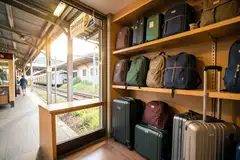
Major rail stations (King's Cross, Paddington, Victoria, Euston) have left-luggage counters run by operators such as Excess Baggage Company, with airport-style security checks — booking ahead online is wise in high season.
Bank holidays
What to expect
On bank holidays (Mondays off scattered through the year) most shops stay open but with reduced hours, while banks and offices close; public transport often runs a weekend-style timetable with scheduled engineering works.
Emergency numbers
Useful numbers
999 — emergency number for police, ambulance and fire brigade. 112 — the single European number also works in the UK. 111 — NHS non-emergency medical advice.